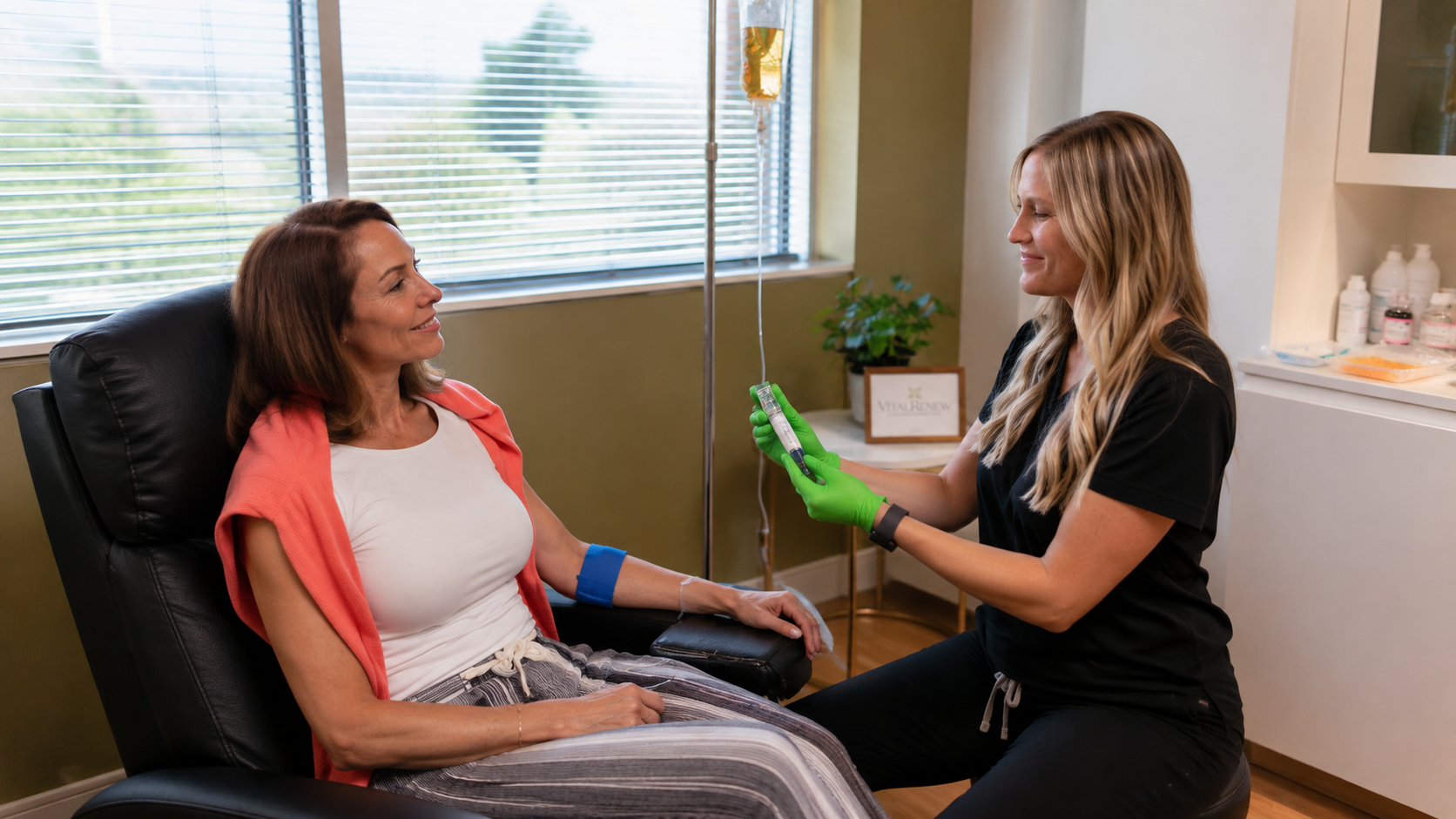
Hormone Pellet Therapy: What It Is, How It Works, and What to Expect
If fatigue, low libido, mood swings, or brain fog have crept into your daily life, you may have already searched "hormone pellet therapy" while looking for answers. Because hormones influence nearly every system in your body, even a small imbalance can throw off how you feel day to day. In this guide, we'll explain what hormone pellet therapy actually involves, how it compares to other delivery methods, and what a first visit looks like at VitalRenew.
We'll also cover how long pellets typically last, what the insertion process feels like, and the questions patients ask most before their first appointment. By the end, you should have a clear sense of whether this option fits your goals.
What Is Hormone Pellet Therapy?
Hormone pellet therapy uses bioidentical hormones, meaning compounds that share the same molecular structure as the hormones your body already produces. Your provider presses these hormones into small, rice-sized cylinders and inserts them just beneath your skin, typically in the hip or upper buttock area. From there, the pellet slowly dissolves over several months, releasing a steady dose of hormone into your bloodstream the entire time.
Because the pellets sit under your skin rather than requiring daily attention, many patients find this delivery method easier to stick with than creams or pills.
How Hormone Pellets Work
Unlike a daily cream or a weekly injection, a pellet doesn't create sharp spikes followed by a slow decline. Instead, your body absorbs a relatively consistent amount of hormone day after day as the pellet gradually breaks down. As a result, many patients describe feeling steadier overall, without the peaks and dips that other methods can sometimes cause.
That said, your individual response depends on your metabolism, activity level, and starting hormone levels, so your provider will monitor your bloodwork and adjust future dosing accordingly. In practice, this usually means a follow-up lab draw a few weeks after your first insertion, followed by another check before your next cycle.
Hormone Pellets vs. Other BHRT Delivery Methods
Patients often ask how pellets stack up against creams, injections, or oral troches. Here's a quick comparison:
| Delivery Method | How Often You Use It | Hormone Level Consistency |
|---|---|---|
| Pellets | Every 3–6 months | Steady, with minimal daily fluctuation |
| Topical Creams | Daily | Can vary based on application and skin absorption |
| Injections | Weekly or biweekly | Peaks shortly after the dose, then tapers off |
| Oral Troches | Multiple times daily | Levels can fluctuate throughout the day |
If you'd like a deeper breakdown of the pros and cons of each option, our article comparing hormone pellets, creams, and injections walks through the details.
Who Might Benefit From Hormone Pellet Therapy?
Hormone pellet therapy works for more than one gender or age group. Both men and women turn to it once bloodwork confirms a hormone imbalance likely contributes to their symptoms.
Women often consider pellet therapy when they're dealing with:
- Hot flashes or night sweats tied to perimenopause or menopause
- Mood swings or increased irritability
- Low libido
- Trouble sleeping through the night
- Persistent fatigue despite adequate rest
Men often consider pellet therapy when they're dealing with:
- Declining energy or motivation
- Reduced muscle mass despite consistent exercise
- Low libido or performance concerns
- Mood changes, including increased irritability or low mood
If any of this sounds familiar, our article on low testosterone in women and our piece on optimal testosterone in men both dig deeper into these symptoms and what they might mean for you.
What to Expect: The Insertion Process
Here's how a typical pellet insertion unfolds at our office:
- Consultation and labs. Your provider reviews your symptoms and orders bloodwork to confirm pellet therapy fits your situation.
- Numbing the area. Your provider applies a local anesthetic to a small area, usually on the hip or upper buttock.
- Tiny incision. Once the area is numb, your provider makes a small incision, so most patients feel little to no discomfort during this step.
- Pellet insertion. Your provider inserts the pellet just beneath the skin through the incision.
- Bandaging. A small adhesive strip closes the area, and you can typically resume most normal activities the same day.
How Long Do Hormone Pellets Last?
Duration varies by gender because men and women metabolize hormones differently:
| Patient | Typical Pellet Duration | When Patients Often Notice Changes |
|---|---|---|
| Women | 3 to 4 months | Within the first few days after insertion |
| Men | 4 to 6 months | Within one to two weeks after insertion |
Because everyone's metabolism differs slightly, your provider will track how you respond and adjust your schedule if your pellets seem to wear off earlier or later than expected.
Potential Benefits of Hormone Pellet Therapy
Compared to daily creams or frequent injections, many patients appreciate that pellet therapy offers:
- More consistent hormone levels throughout the day
- Fewer doses to remember, since pellets last for months at a time
- No daily application that can transfer to others through skin contact
- A convenient option for patients with busy or unpredictable schedules
Of course, individual results vary, and your provider can help set realistic expectations based on your specific labs and symptoms. Because everyone starts from a different baseline, what feels like a dramatic change for one patient might feel more gradual for another, and that's completely normal.
Risks and Side Effects to Know About
Like any medical procedure, hormone pellet therapy carries some considerations worth discussing with your provider. Minor bruising or soreness at the insertion site is common and typically resolves within a few days. Infection at the site is rare, though you should watch for unusual redness, swelling, or drainage and call your provider if you notice any of these signs.
Because pellets remain in your body for months at a time, your provider will also want to know about your personal and family medical history, including any history of hormone-sensitive conditions or clotting disorders. Everyone's risk profile is different, so an open conversation with your provider before your first insertion helps ensure this treatment fits your specific situation safely.
Your provider will also recheck your hormone levels through follow-up bloodwork after your first pellet cycle. That way, if your dose needs adjusting, your next set of pellets can reflect what your body actually needs rather than a one-size-fits-all estimate.
Is Hormone Pellet Therapy Right for You?
Because hormone therapy works best when it's based on real data rather than guesswork, we start every consultation with functional medicine testing to confirm what's actually happening with your hormone levels. From there, our hormone replacement therapy team can walk you through whether pellets, creams, or injections best fit your goals and lifestyle. If you're a woman specifically weighing your options, our dedicated article on hormone pellets for women covers additional details relevant to your situation.
Frequently Asked Questions
Does pellet insertion hurt?
Most patients feel only a quick pinch from the local anesthetic, followed by mild pressure during the insertion itself. Any soreness afterward usually fades within a few days.
How soon will I feel a difference?
Women often notice changes within the first few days, while men typically notice changes within one to two weeks. That said, your timeline may vary depending on your starting hormone levels and overall health.
Can I have pellets removed early if needed?
In most cases, yes, though removal isn't always necessary since pellets naturally dissolve over time. Talk with your provider if you have concerns so they can walk you through your options.
Are hormone pellets bioidentical?
Yes. VitalRenew uses bioidentical hormones, which means they share the same molecular structure as the hormones your body naturally produces, rather than synthetic alternatives.
Is hormone pellet therapy only for women?
Not at all. Men experiencing symptoms of low testosterone often benefit from pellet therapy just as much as women managing perimenopause or menopause symptoms.
How do I know if pellets are better for me than creams or injections?
It depends on your lifestyle, your labs, and your personal preferences. Our comparison article on BHRT delivery methods can help you think through the options before your consultation.
What happens if I don't like how the pellets make me feel?
Tell your provider right away so they can review your bloodwork and adjust your next dose accordingly. Because pellets naturally dissolve over months, most concerns resolve as your levels settle or as your next cycle gets fine-tuned.
Ready to find out whether hormone pellet therapy fits your goals? Call or text VitalRenew Functional & Integrative Medicine at (615) 603-8957, or visit us at 1747 Medical Center Parkway, Suite 330, Murfreesboro, TN 37129 to schedule your consultation.