Hormone Pellets for Women
What to Expect from BHRT Pellet Therapy

Hormone pellets for women have become one of the most sought-after options in bioidentical hormone replacement therapy — and for good reason. Unlike daily pills, topical creams, or weekly injections, hormone pellets deliver a steady, consistent level of hormones over several months, closely mimicking the way your body naturally releases hormones.
At VitalRenew Functional & Integrative Medicine in Murfreesboro, TN, pellet therapy is one of our most popular and effective treatments for women navigating perimenopause, menopause, or other hormone-related imbalances. If you've wondered whether hormone pellets are the right choice for you, this guide breaks down exactly how they work, what they treat, and what to expect from the process.
What Are Hormone Pellets?
Hormone pellets are small, custom-compounded cylinders — slightly larger than a grain of rice — made from bioidentical estradiol or testosterone. "Bioidentical" means the molecular structure of these hormones is identical to the hormones your body naturally produces. Unlike synthetic hormones, which are structurally different from endogenous hormones, bioidentical pellets are derived from plant sources and recognized by your body's hormone receptors.
Once inserted just beneath the skin, pellets dissolve slowly and release hormones directly into the bloodstream at a consistent rate. This eliminates the peaks and valleys in hormone levels that are commonly associated with other delivery methods. For a full overview of our BHRT options, visit our Hormone Replacement Therapy page.
Why Do Women Need Hormone Pellets?
Hormones don't decline in isolation. As women enter perimenopause and menopause — typically beginning in their late 30s to early 50s — levels of estrogen, progesterone, and testosterone all change. Each of these hormones plays a distinct role in how you feel every day.
Common symptoms of hormone imbalance in women include:
- Hot flashes and night sweats
- Fatigue and low energy
- Mood changes, irritability, and anxiety
- Brain fog and difficulty concentrating
- Low libido and sexual dysfunction
- Vaginal dryness and discomfort
- Sleep disturbances
- Weight gain, particularly around the midsection
- Hair thinning
- Bone density loss
- Joint pain and muscle weakness
Many women are surprised to learn that testosterone — typically thought of as a male hormone — is equally important for women. Women produce testosterone in the ovaries and adrenal glands, and declining testosterone contributes to low energy, reduced muscle tone, decreased libido, and cognitive changes. Hormone pellets can deliver both estradiol and testosterone, addressing multiple symptoms at once.
BHRT Pellets vs. Other Hormone Delivery Methods
Women considering BHRT often ask how pellets compare to other options. Here's a practical overview:
Topical Creams and Gels
Pros: Non-invasive, easy to adjust dosing.
Cons: Absorption is variable; daily application required; risk of transfer to partners or children through skin contact; levels fluctuate throughout the day.
Oral Troches (Dissolve Under the Tongue)
Pros: Easy to use; no injection required.
Cons: Hormone passes through oral mucosa with variable absorption; requires daily dosing; may cause fluctuating hormone levels.
Injectable Testosterone (for Women)
Pros: Effective; predictable delivery.
Cons: Requires regular self-injection or clinic visits; can cause peaks and crashes in hormone levels.
Hormone Pellets
Pros: Inserted once every 3–4 months; consistent steady-state hormone release; no daily compliance required; no transfer risk; shown to provide superior symptom relief in comparative studies; do not carry the blood clot risk associated with oral estrogen.
Cons: Requires a minor in-office procedure; dosing cannot be adjusted once inserted.
For most of our Murfreesboro patients, the consistent delivery, long duration, and freedom from daily dosing make pellets the preferred choice. Read more about bioidentical hormone replacement therapy in Murfreesboro.
How Long Do Hormone Pellets Last for Women?
This is one of the most important facts to understand about pellet therapy: hormone pellets for women typically last 3–4 months. You will return to our Murfreesboro clinic approximately three to four times per year for re-insertion, depending on your individual metabolism, activity level, and symptom response.
Note: Male testosterone pellets follow a different timeline, typically lasting 4–6 months.
The Pellet Insertion Procedure: Step by Step
Many patients feel some apprehension about the procedure before they've experienced it. In practice, hormone pellet insertion is a minor, well-tolerated in-office procedure that takes approximately 15–20 minutes from start to finish.
Step 1: Lab Work First
Before your first insertion, we'll run a comprehensive hormone panel through our functional medicine testing — including estradiol, testosterone, DHEA, progesterone, thyroid, and cortisol — along with a full metabolic and cardiovascular workup. Your pellet dosing is customized based on your lab results, symptoms, age, and health history. There is no guessing.
Step 2: Preparation
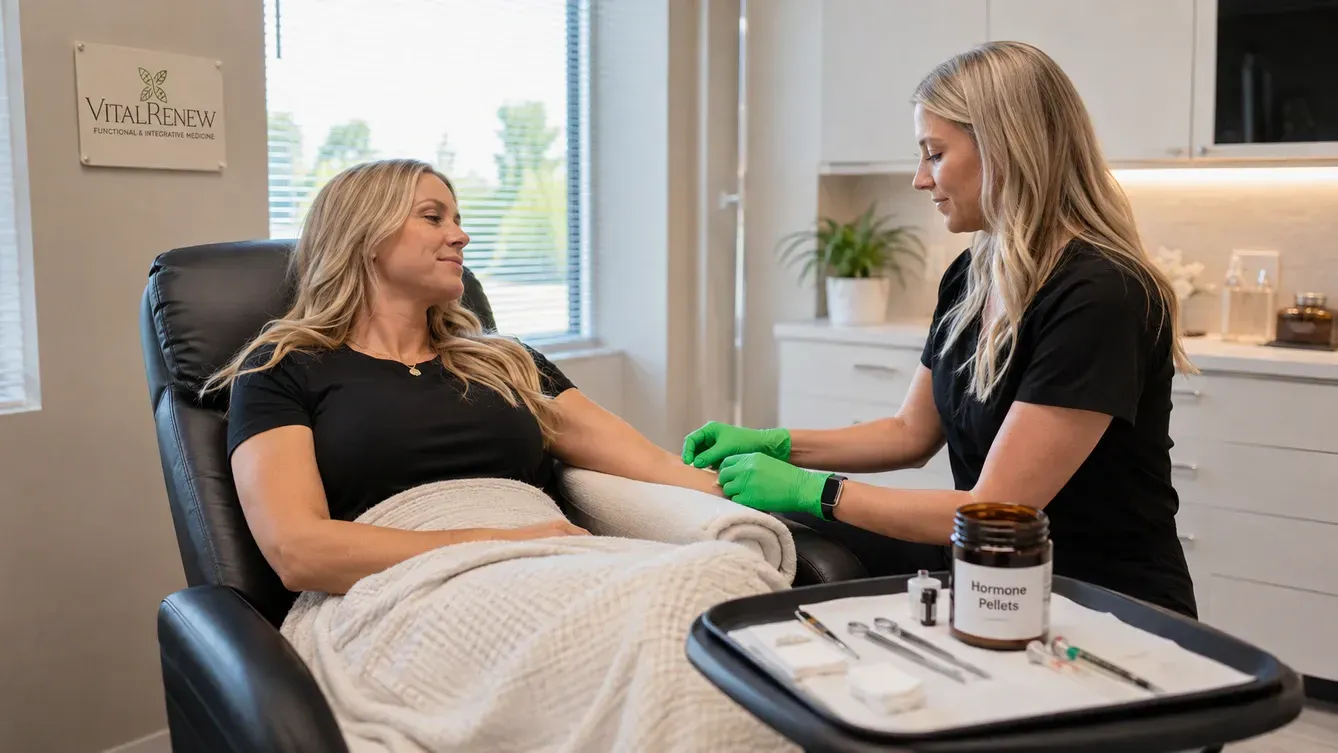
On the day of your procedure, the insertion site (typically the upper buttocks or hip area) is cleaned and numbed with a local anesthetic. Most patients report minimal to no discomfort after the numbing takes effect.
Step 3: Insertion
A small incision — smaller than a pencil eraser — is made in the skin. The pellet (or pellets) are inserted into the subcutaneous fat layer using a trocar device. The incision is closed with a small adhesive strip. No stitches are required.
Step 4: Recovery
You'll be up and back to daily activities immediately. We recommend avoiding submerging the insertion site in water for 4–5 days and avoiding intense lower body exercise for a few days as the site heals.
Step 5: Follow-Up and Monitoring
We typically check your hormone levels four to six weeks after insertion to evaluate your response and make dosing adjustments for future insertions. Ongoing monitoring ensures your levels stay in the optimal range — not just the "normal" range.
What Results Can Women Expect from Hormone Pellet Therapy?
Most women begin to notice improvements within 2–4 weeks of their first insertion, with full effects typically felt within 8–12 weeks. Results vary by individual, but commonly reported improvements include:
- Weeks 1–4: Better sleep, improved mood, initial energy lift
- Weeks 4–8: Noticeable reduction in hot flashes and night sweats; improved libido
- Weeks 8–12: Sustained energy, clearer thinking, improved body composition, improved sense of wellbeing
Some symptoms — such as vaginal dryness or bone density — require longer-term, consistent BHRT to show measurable improvement.
Is BHRT Pellet Therapy Safe?
Patient safety is our first priority. Here's what the evidence supports:
- Bioidentical hormones, particularly transdermal/subcutaneous delivery methods like pellets, are not associated with the increased blood clot risk linked to oral (pill-form) estrogen.
- We screen every patient carefully before prescribing pellets, including cardiovascular history, personal and family history of hormone-sensitive cancers, and baseline lab work.
- We do not prescribe a one-size-fits-all pellet. Every dose is individualized based on your labs and symptoms.
As with any medical treatment, pellet therapy is not appropriate for every patient. Our practitioners will review your full health history and discuss any contraindications during your consultation.
Frequently Asked Questions About Hormone Pellets for Women
How do I know if hormone pellets are right for me?
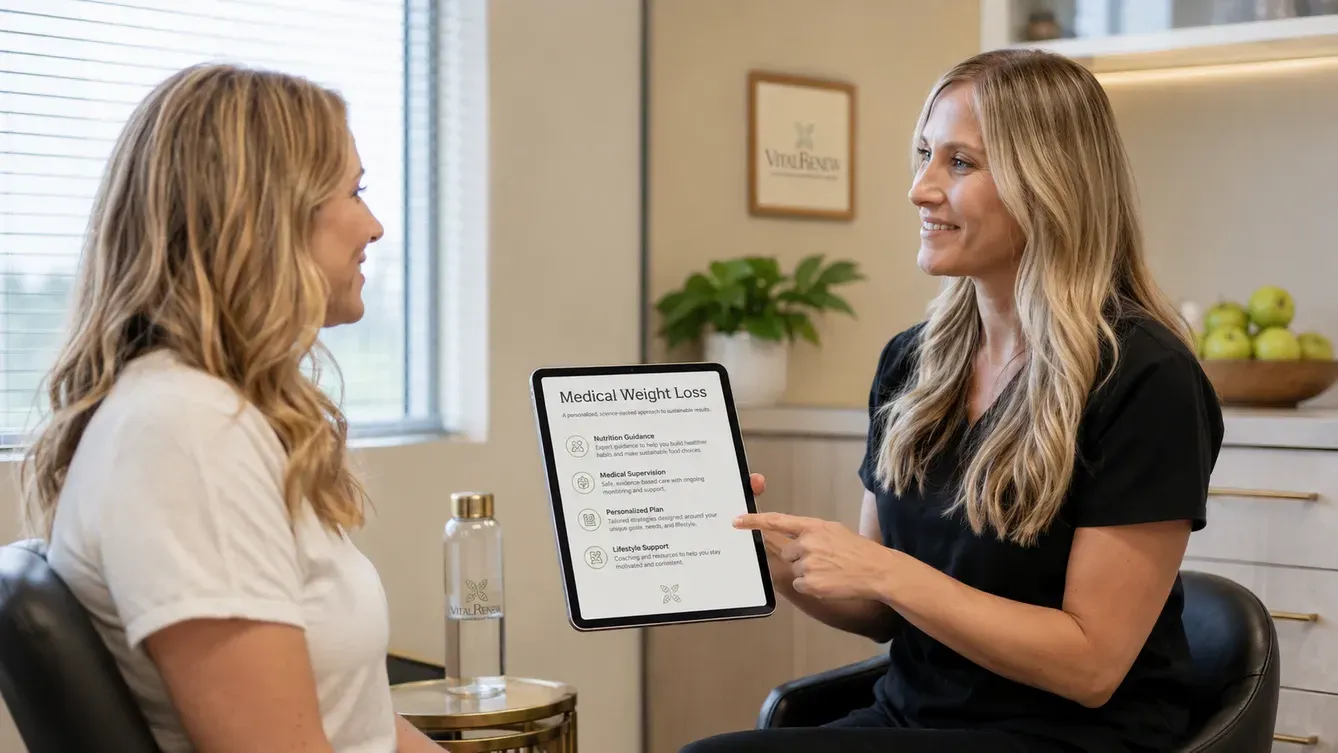
The best way to find out is through a comprehensive consultation and hormone panel. If your symptoms align with hormonal imbalance and you're a good candidate based on your health history, we'll walk you through your options.
What if I have been told my hormone levels are "normal"?
Standard lab reference ranges are designed to flag pathology — not optimize function. Many women have hormone levels that fall within the "normal" range but still experience significant symptoms. We look for optimal ranges, not just average ones. Our functional medicine testing is designed to find those gaps.
Can I switch from creams or pills to pellets?
Yes. Many of our patients transition from other hormone delivery methods to pellets. We'll guide you through the process, including any necessary washout periods.
Do you offer telemedicine for BHRT consultations?
Initial consultations and follow-up care for established patients may be available via telemedicine. Contact our office for details.
VitalRenew's Approach to Hormone Optimization for Women
At VitalRenew, hormone pellet therapy is never a standalone prescription. It is part of a comprehensive approach that may also include functional lab testing to identify root causes, thyroid optimization, adrenal support, nutrition guidance, and lifestyle recommendations — because optimal hormone health requires looking at the whole person.
Our practitioners — Stevie Smoot, FNP-C (A4M Fellowship, ABAAHP), Kelsey Choate, FNP-C (IFMCP Certified), Dr. Becca Ranz, DO, and Autumn Martin, FNP — each bring specialized training in functional, integrative, and hormone medicine. You will be seen by someone who is genuinely invested in your long-term wellbeing.
We serve women in Murfreesboro, Nashville, Franklin, Brentwood, Smyrna, La Vergne, and across the country via telemedicine.
Ready to Explore Hormone Pellets?
If you're tired of feeling like a lesser version of yourself and are ready to explore whether hormone pellets might be the missing piece, we'd love to meet you.
Call or text VitalRenew at (615) 603-8957 or schedule your initial consultation online. Our office is located at 1747 Medical Center Parkway, Suite 330, Murfreesboro, TN 37129. Office hours are Monday through Friday, 8:00 am to 4:00 pm.