NAD IV Therapy: What It Is, What the Evidence Shows, and What to Expect
NAD IV therapy has moved from niche addiction clinics into mainstream wellness in under a decade. Patients hear about it from podcasts, from friends, and from longevity influencers, then arrive with a reasonable question: does it actually do anything?
This guide answers that question carefully. It explains what NAD+ does inside your cells, describes what the current human research supports and where it falls short, and walks through what an infusion session actually feels like.
The short version: NAD+ plays an essential role in cellular energy production and DNA repair, and its levels decline with age. Intravenous delivery bypasses digestion entirely. However, human research on IV NAD+ specifically remains limited, so we present it as a supportive therapy rather than a proven treatment for any disease.
What Is NAD+?
Nicotinamide adenine dinucleotide, or NAD+, is a coenzyme present in every living cell. Think of it as a molecular shuttle. It carries electrons through the reactions that convert food into usable energy, and it acts as a required cofactor for enzymes that repair DNA, regulate inflammation, and govern how cells respond to stress.
Three roles matter most for the questions patients typically ask.
- Mitochondrial energy production: NAD+ participates directly in the pathways that generate ATP, the currency your cells spend on everything they do.
- DNA repair: Enzymes called PARPs consume NAD+ while repairing damaged DNA strands.
- Cellular signaling: Sirtuins, a family of proteins tied to metabolic regulation and stress response, depend on NAD+ to function.
Because these pathways run constantly, your cells must continually replenish NAD+ rather than store it. Your body synthesizes it from dietary precursors, primarily niacin and tryptophan, through what researchers call the salvage pathway.
Why NAD+ Levels Decline
Research consistently shows that NAD+ availability drops with age across multiple tissues. Several factors accelerate that decline, and most of them appear routinely in the patients we see.
| Factor | How It Affects NAD+ |
|---|---|
| Aging | Salvage pathway efficiency decreases while consumption continues |
| Chronic inflammation | Immune activation increases NAD+ consumption |
| DNA damage from environmental exposures | Repair enzymes draw heavily on available NAD+ |
| Chronic alcohol use | Depletes niacin and tryptophan, the dietary precursors |
| Poor sleep and circadian disruption | NAD+ synthesis follows a daily rhythm that irregular schedules blunt |
| Malabsorption conditions | Reduced precursor absorption limits synthesis |
Notably, several of those factors overlap with the symptoms patients describe when they ask about NAD therapy in the first place: persistent fatigue, mental fog, and slow recovery.
How NAD IV Therapy Works
Oral supplements deliver NAD+ precursors such as nicotinamide riboside or nicotinamide mononucleotide. Those precursors work well for many people, and studies show they raise blood NAD+ levels reliably. However, the liver metabolizes a substantial portion before it reaches the rest of the body.
Intravenous administration takes a different route. It places the compound directly into the bloodstream, which bypasses digestion and first-pass liver metabolism entirely. Therefore, IV delivery achieves full bioavailability in a way oral dosing cannot.
At VitalRenew, NAD infusions run within our IV therapy program, where a registered nurse administers and monitors every session. We typically offer doses ranging from 250 mg to 750 mg, and your provider selects the starting dose based on your history and goals.
What the Research Currently Supports
Honesty matters here, particularly because marketing around NAD therapy frequently outpaces the science. We want patients to understand both what the evidence suggests and where it stops.
What we know reasonably well
- NAD+ is essential to mitochondrial energy metabolism and DNA repair. That biochemistry is well established.
- NAD+ levels decline with age in multiple tissues, and researchers have documented that decline extensively.
- Oral precursors such as nicotinamide riboside raise blood NAD+ levels safely at studied doses.
- Intravenous administration achieves higher bioavailability than oral routes.
Where the evidence remains limited
- Human clinical trials specifically evaluating IV NAD+ are few, and most existing studies are small, retrospective, or lack placebo controls.
- Researchers have not fully characterized how NAD+ itself enters cells after intravenous delivery.
- A systematic review of NAD-targeting trials found mixed results, with some studies reporting benefit and others reporting none.
- No regulatory body has approved IV NAD+ as a treatment for any specific disease.
Our position:
We offer NAD IV therapy as a supportive wellness therapy within a broader plan. We do not present it as a cure, a treatment for any diagnosed condition, or a substitute for addressing underlying causes of fatigue such as thyroid dysfunction, anemia, sleep apnea, or nutrient deficiency.
Why Patients Ask About NAD IV Therapy
Patients bring a wide range of goals to the conversation. The table below summarizes the most common ones alongside a plain assessment of the evidence behind each.
| Patient Goal | Proposed Rationale | Evidence Strength |
|---|---|---|
| Persistent fatigue and low energy | Supports mitochondrial ATP production | Mechanistically plausible; limited controlled human data |
| Mental clarity and focus | NAD+ supports neuronal energy metabolism | Early and largely anecdotal |
| Recovery support in addiction care | Historic clinical use dating to the 1960s | Long-standing use; modern controlled trials lacking |
| Healthy aging and longevity | Sirtuin and DNA repair pathways depend on NAD+ | Strong preclinical basis; human outcome data immature |
| Post-viral fatigue | Addresses mitochondrial dysfunction after illness | Under investigation; not established |
| Athletic recovery | Supports cellular repair after intense training | Preliminary |
What to Expect During a Session
NAD infusions take considerably longer than a standard vitamin drip, and the reason is straightforward: infusion rate determines comfort. Pushing NAD+ quickly produces unpleasant sensations, so our nurses run it slowly and adjust in real time.
- Consultation and screening. Your provider reviews your history, medications, and goals, and orders labs when appropriate.
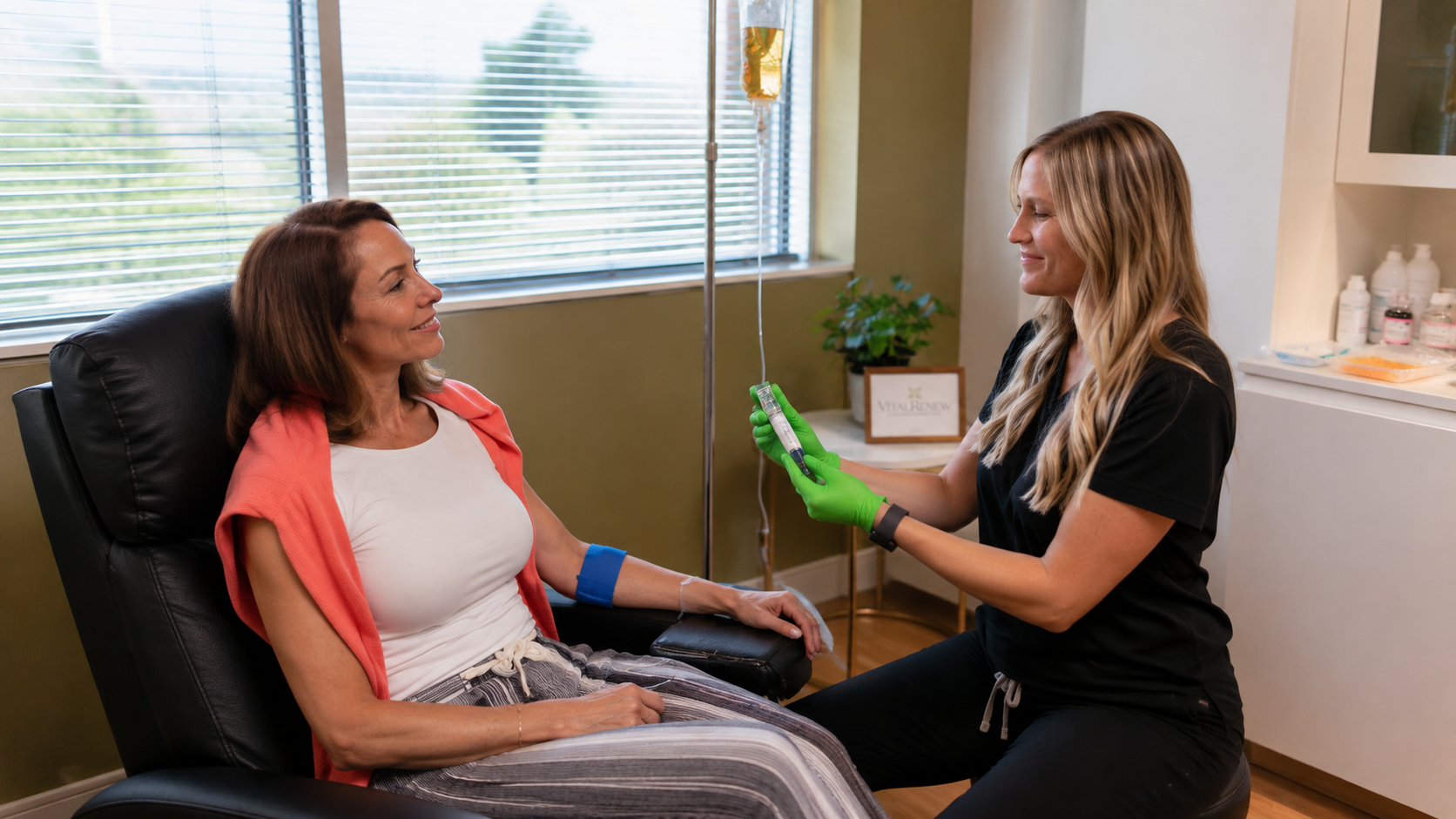
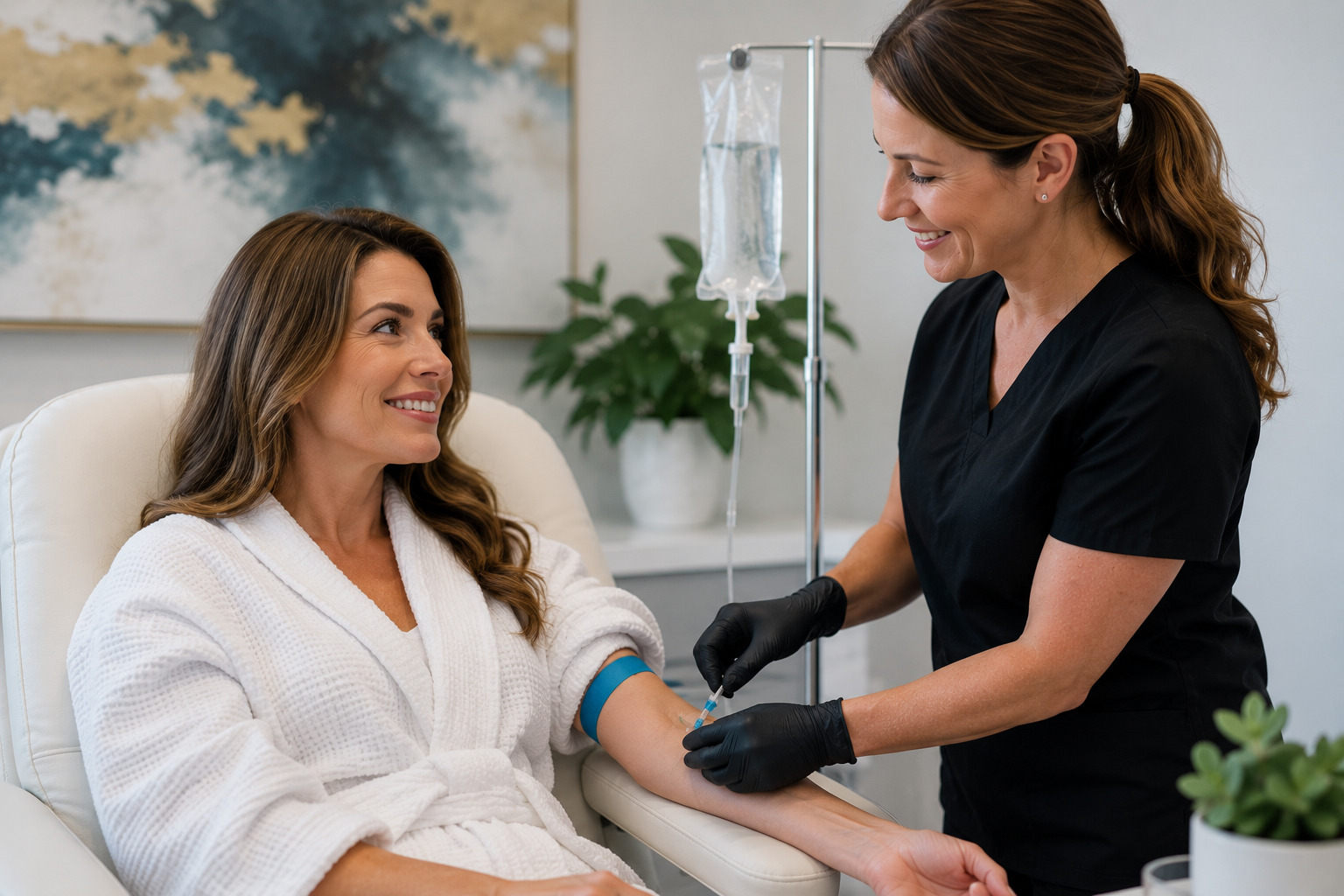
- Setup. A nurse places a small IV catheter and starts the infusion at a deliberately low rate.
- Titration. If you feel chest tightness, nausea, or flushing, the nurse slows the drip until the sensation resolves. Those symptoms track directly with infusion speed.
- Infusion time. Expect roughly one to two hours for lower doses and three or more hours for higher doses.
- Aftercare. Most patients return to normal activity immediately. We recommend hydration and a protein-containing meal afterward.
Many patients bring a laptop, a book, or headphones. Our IV suite accommodates longer sessions comfortably, and our nursing staff checks in throughout.
How Many Sessions Do Patients Typically Receive?
Protocols vary by goal. Some patients begin with a short series of consecutive daily infusions, then transition to periodic maintenance. Others prefer single sessions spaced weeks apart. Your provider recommends a schedule after reviewing your labs and response, rather than applying a fixed formula.
Side Effects and Safety
Reported side effects during infusion include nausea, flushing, chest tightness, abdominal cramping, headache, sweating, and lightheadedness. Importantly, these sensations typically resolve within minutes once the nurse slows the infusion, and they rarely persist afterward.
Certain patients should discuss NAD therapy carefully with a provider before proceeding.
- Pregnant or breastfeeding patients
- Patients with significant cardiovascular disease or arrhythmia
- Patients with active infection or acute illness
- Patients with kidney or liver impairment
- Anyone taking medications that require careful monitoring alongside new therapies
Administration setting also matters. A licensed nurse should monitor the entire infusion, and the clinic should maintain protocols for adverse reactions. At-home NAD kits and unsupervised infusions eliminate exactly the oversight that keeps this therapy comfortable and safe.
How NAD Therapy Fits a Larger Plan
Fatigue rarely has a single cause. Before recommending any infusion series, we look for the drivers that an IV cannot fix on its own.
Our functional medicine testing evaluates thyroid function, iron and ferritin status, B12 and folate, inflammatory markers, and cortisol patterns. Hormonal decline frequently contributes as well, which is why some patients pair NAD therapy with bioidentical hormone replacement therapy. Others combine it with peptide therapy aimed at cellular repair and recovery.
NAD sits alongside several other infusions we offer, including glutathione, high-dose vitamin C, and the Myers’ cocktail. Our IV therapy page outlines the full menu, and membership options reduce per-session cost for patients who infuse regularly.
Frequently Asked Questions
How long does a NAD IV therapy session take?
Plan for one to two hours at lower doses and three or more hours at higher doses. Infusion speed drives comfort, so your nurse adjusts the rate to what you tolerate rather than rushing to finish.
Does NAD IV therapy hurt?
The IV placement feels like any routine blood draw. During the infusion, some patients notice chest tightness or a warm flushing sensation, especially early on. Slowing the drip resolves those sensations quickly.
Is NAD IV therapy better than oral NAD supplements?
IV delivery achieves higher bioavailability, since it bypasses digestion and liver metabolism. That said, oral precursors have more supporting human research behind them and cost far less. Many patients use both, and your provider can help you decide which approach fits your goals and budget.
How soon will I feel something?
Responses vary widely. Some patients report improved clarity within a day or two, while others notice change only after a series. Because individual variation is substantial, we track response deliberately rather than promising a timeline.
Is NAD IV therapy safe?
Administered by trained clinical staff at an appropriate rate, NAD infusions are generally well tolerated. Even so, safety depends on proper screening, professional monitoring, and honest disclosure of your medical history and medications.
Where can I get NAD IV therapy near Murfreesboro?
VitalRenew offers NAD infusions at our Murfreesboro clinic on Medical Center Parkway, serving patients from Rutherford County and the greater Nashville area. Call or text (615) 603-8957 or visit our contact page to schedule.
Considering NAD IV Therapy? Start With an Evaluation
NAD+ biology genuinely matters to how your cells produce energy and repair damage. Whether an infusion series is the right next step for you depends on what your labs show and what else is driving your symptoms.
VitalRenew Functional & Integrative Medicine
1747 Medical Center Parkway, Suite 330, Murfreesboro, TN 37129
Call or text: (615) 603-8957
Hours: Monday–Friday, 8:00 a.m.–4:00 p.m. (closed daily 12–1 p.m.)
Book your consultation: vitalrenewclinic.com/contact
Medical disclaimer: This article provides general education and does not constitute medical advice, diagnosis, or treatment. NAD IV therapy is not approved by the FDA to treat, cure, or prevent any disease. Individual results vary. Discuss any therapy decision with a qualified healthcare provider who has reviewed your history.
About the author: Stevie Smoot, FNP-C, APRN, MSN, ABAAHP is a board-certified Family Nurse Practitioner and co-founder of VitalRenew Functional & Integrative Medicine in Murfreesboro, Tennessee. She completed a fellowship through the American Academy of Anti-Aging Medicine and the Metabolic Medicine Institute and holds certification in IV nutrient and chelation therapies through the American Academy of Anti-Aging Medicine.